



I write lots about bear markets.
Right here’s a random assortment of my best hits lately:
I deal with corrections, bear markets, and crashes as a result of these are the actually necessary occasions for buyers. Success as an investor comes out of your actions in the course of the unhealthy occasions.
These items are all in regards to the inventory market as a result of there haven’t been many downturns within the bond market traditionally. Bonds are boring, they usually’re not as risky because the inventory market…more often than not.
The Fed took rates of interest from 0% within the pandemic to five% in a rush as inflation accelerated:
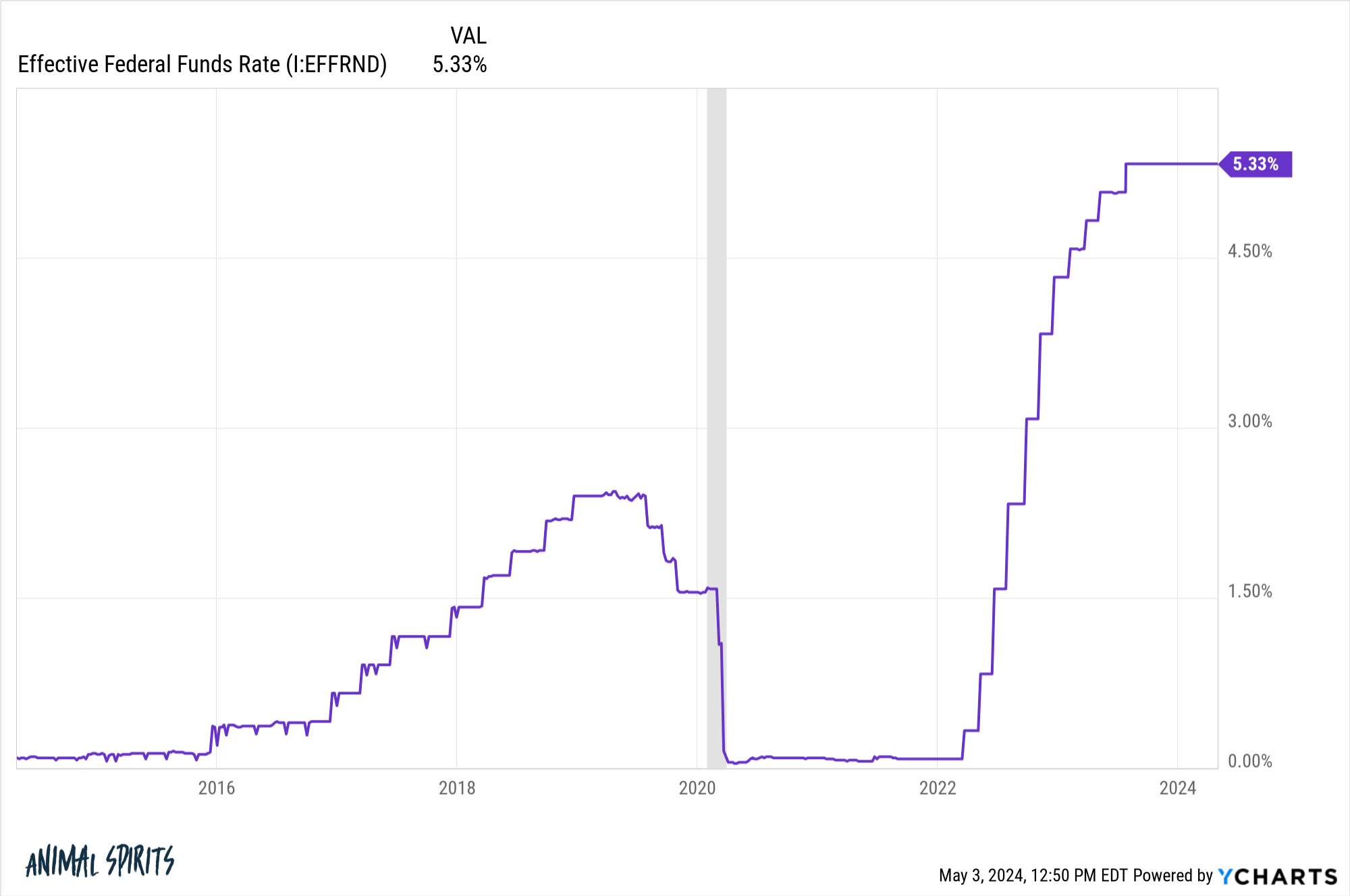
As rates of interest rise, bond costs fall. When charges rise shortly, bond costs fall shortly.
The Bloomberg Mixture Bond Index is at present experiencing its largest drawdown since its inception in 1976 by way of each magnitude and size of time:
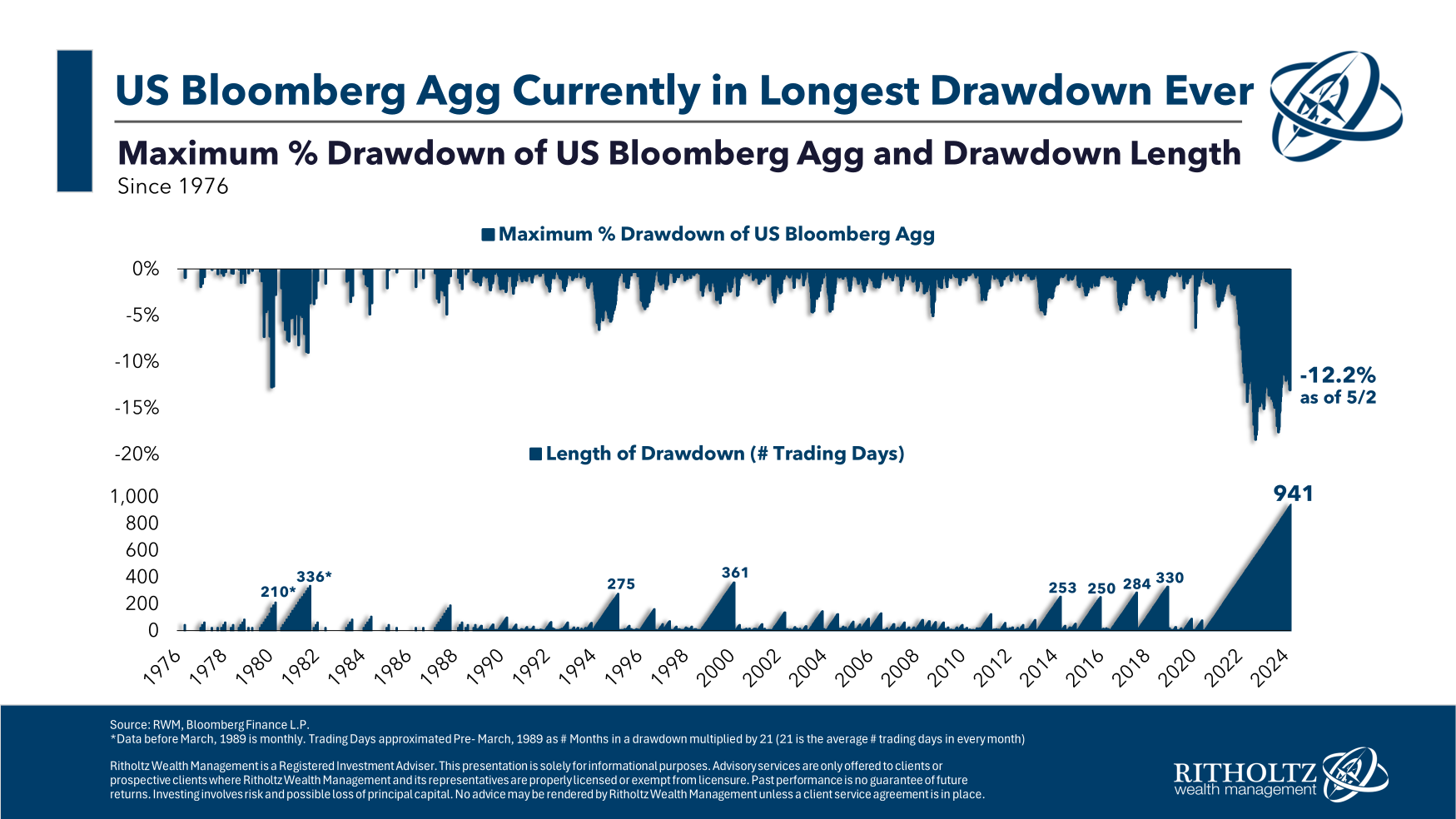
At its nadir, the Agg was down greater than 18%. It’s nonetheless down double-digits.
Different areas of the bond market are nonetheless within the midst of even worse drawdowns:
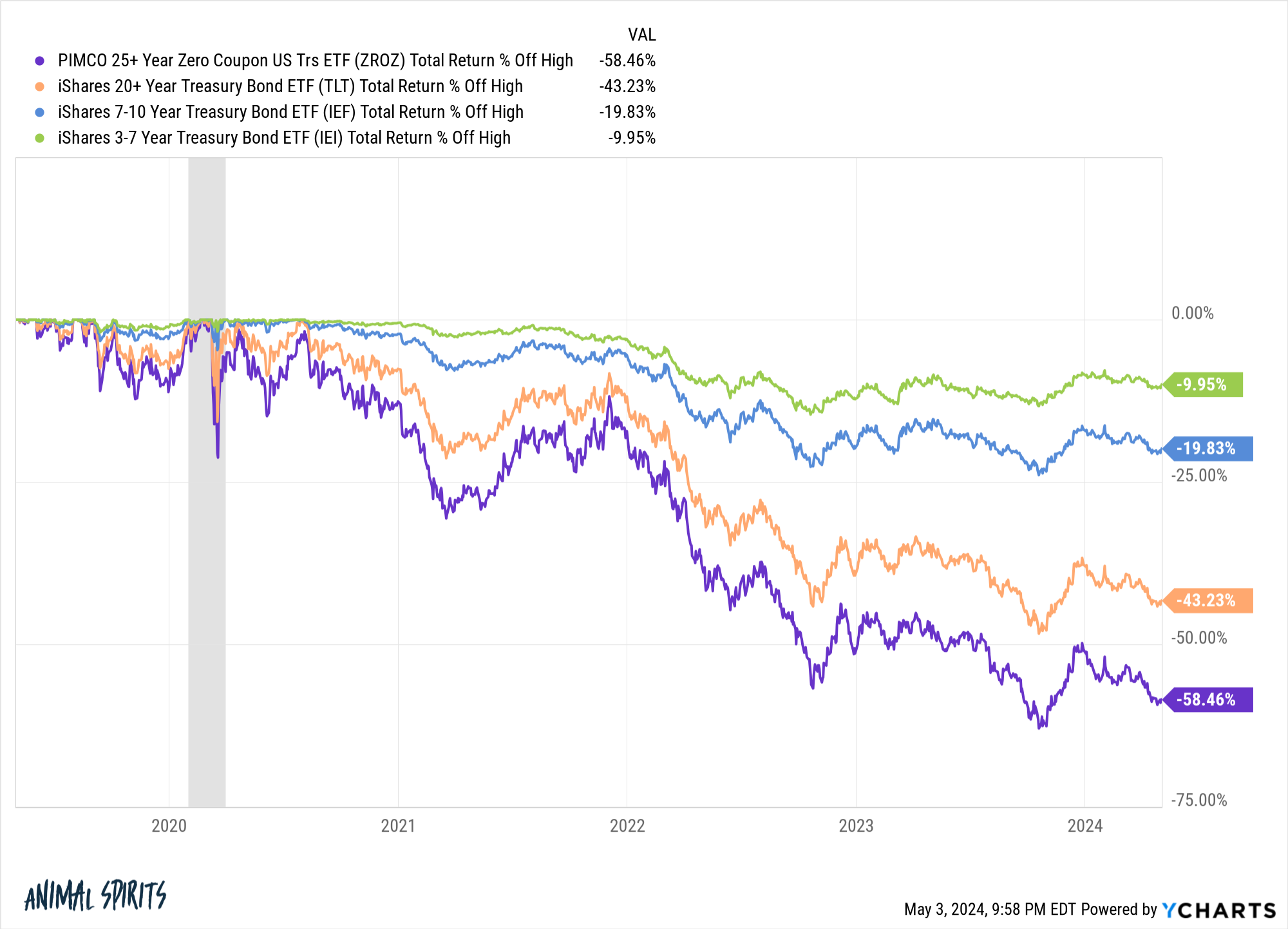
Zero coupon bonds, that are primarily long-duration bonds on steroids, are nonetheless down virtually 60%. Lengthy-term Treasuries are nonetheless down greater than 40%. Even 7-10 yr Treasuries are down 20%.
All of those numbers embrace curiosity however it’s even worse than it appears as a result of inflation has taken one other 20% or so off the highest.
So why aren’t buyers freaking out extra?
Are you able to think about if we have been 4 years right into a inventory market crash and the losses have been nonetheless within the 40-60% vary?
There could be countless headlines within the monetary media. Traders could be freaking out.
But bond buyers appear comparatively calm. Cash is definitely pouring into long-term Treasuries regardless of the route:

Quite a lot of this has to do with buyers positioning for decrease charges that haven’t come but however it’s not like persons are operating for the exits.
Why aren’t extra buyers blowing a gasket out about bonds?
Some ideas:
Yield issues. Bonds have gotten killed as a result of charges rose. Now that charges have risen, yields are increased. Traders like increased yields!
The losses are the previous. The yields are the long run.
There may be another. When the inventory market crashes there are usually few locations to cover. Certain, low vol or prime quality dividend shares won’t fall almost as a lot as the general market however a 30% loss as a substitute of 40% drawdown presents little comfort.
There are a lot better alternate options concerning volatility discount in mounted revenue.
T-bills have yielded greater than 4% for almost two years. Yields on extremely short-term authorities paper have been over 5% for greater than a yr.
Plus, you have got cash market funds, on-line financial savings accounts, and CDs with equally excessive yields.
There aren’t all that many buyers who’ve a excessive allocation to the areas of the bond market with the most important losses as a result of higher choices have been accessible.
Shares and bonds are completely different. Bonds are ruled extra by math than shares in the case of anticipated returns.
Shopping for shares when they’re down is usually an exquisite technique however there aren’t any ensures they’ll come again. There’s extra uncertainty concerned throughout a inventory bear market.
Bond yields may at all times rise additional, however the beginning yields are indication of long-run anticipated returns. The yield tells the story in high-quality mounted revenue.
There are extra feelings concerned with the inventory market, as nicely.
If something, the bond bear market reveals buyers, on common, proceed to get smarter with their selections.
The bear market has been painful when you went into it with lengthy length belongings. However when you have been clever about the way you make investments your mounted revenue allocation and unfold your bets, the bond bear market hasn’t been all that painful.
And now that yields are increased, the long run appears a lot brighter from right here.
Additional Studying:
The Distinction Between Shares & Bonds
